Gaya Street waking up from the corner at dawn

05°58′N / 116°04′E · SABAH, MALAYSIA

Step into
Gaya Street

In Kota Kinabalu, Sunday starts with a cup of kopi and a street slowly warming up.

Start walking
FIELD NOTE 01Jalan GayaA city walk that begins with breakfast
01THE STREET

Not a checklist of sights — the pulse of a street.

Under the old shophouses,
Sunday has its own pace.

Gaya Street is the best part of old Kota Kinabalu to get to know on foot. On weekdays it is coffee shops, faded signboards and afternoon shade; on Sunday the whole of Jalan Gaya gives way to the market, and people arrive with fruit, handicrafts, breakfast and the mood of not being in a hurry.

Hear its story first →
KK
88000

These notes are for first-time visitors — and for anyone who always stops ten extra minutes when passing by.

02AT A GLANCE
AddressJalan Gaya, 88000Old town Kota Kinabalu · Sabah, Malaysia
Sunday marketSun 07:00–12:00Street closes to become a walking market
EntryFreeStall purchases extra
Best timeEarly morningCooler, fullest market
Stay2–3 hHalf a day with an old-town walk
Rating4.4 / 8,967Based on visitor reviews
03STREET HISTORY

One street, seven turns.

From clock tower to market,
this street kept changing its name.

Gaya Street is older than the name Kota Kinabalu. It was rebuilt after bombing, grew up through renamings, and finally gave its Sundays to the market. Walk down the timeline and you are walking through the city’s modern history.

The name · as told

Two stories behind the name “Gaya”

One version traces it to Gaya Bay and Pulau Gaya (Gaya Island) south of the street; another popular story links it to a colonial official of British North Borneo. Both versions survive; the historical record is still open.

1905

Atkinson Clock Tower is completed

Built in memory of Francis George Atkinson, first governor of British North Borneo, it stands on Signal Hill — one of Kota Kinabalu’s pre-war buildings to survive the bombing. Look up from Gaya Street and you can see it.

1931

The name Jesselton

The fledgling port city took its name from Charles Jessel, deputy chairman of the British North Borneo Chartered Company. The old town around Gaya Street began to grow.

1943–1945

The city in wartime

During World War II, Allied bombing flattened much of Jesselton, destroying a large number of pre-war buildings.

1950s

Rebuilding and the five-foot way

As the city rebuilt, most of the shophouses along Gaya Street date from this period. The five-foot-way arcades — a building language left by colonial planning — link shop, pedestrian and the Kota Kinabalu weather in one continuous gesture.

1968

Renamed Kota Kinabalu

Jesselton became Kota Kinabalu, and Gaya Street continued as the living spine of the old town.

1970s–80s

The Sunday market takes shape

Pasar Minggu grew from street vendors into a large weekly open-air market that closes the road every Sunday — a Sunday ritual of Kota Kinabalu that continues to this day.

04STORIES FROM THE STREET
I

Where does “Gaya” come from?

The most common story traces the name to Gaya Bay and Gaya Island; other sources connect it to a colonial official. With no firm archive, both threads are told side by side — a familiar way for locals to open a conversation.

Unverified; two versions coexist.
II

“Peace for the nation, ease for the people” under the gate

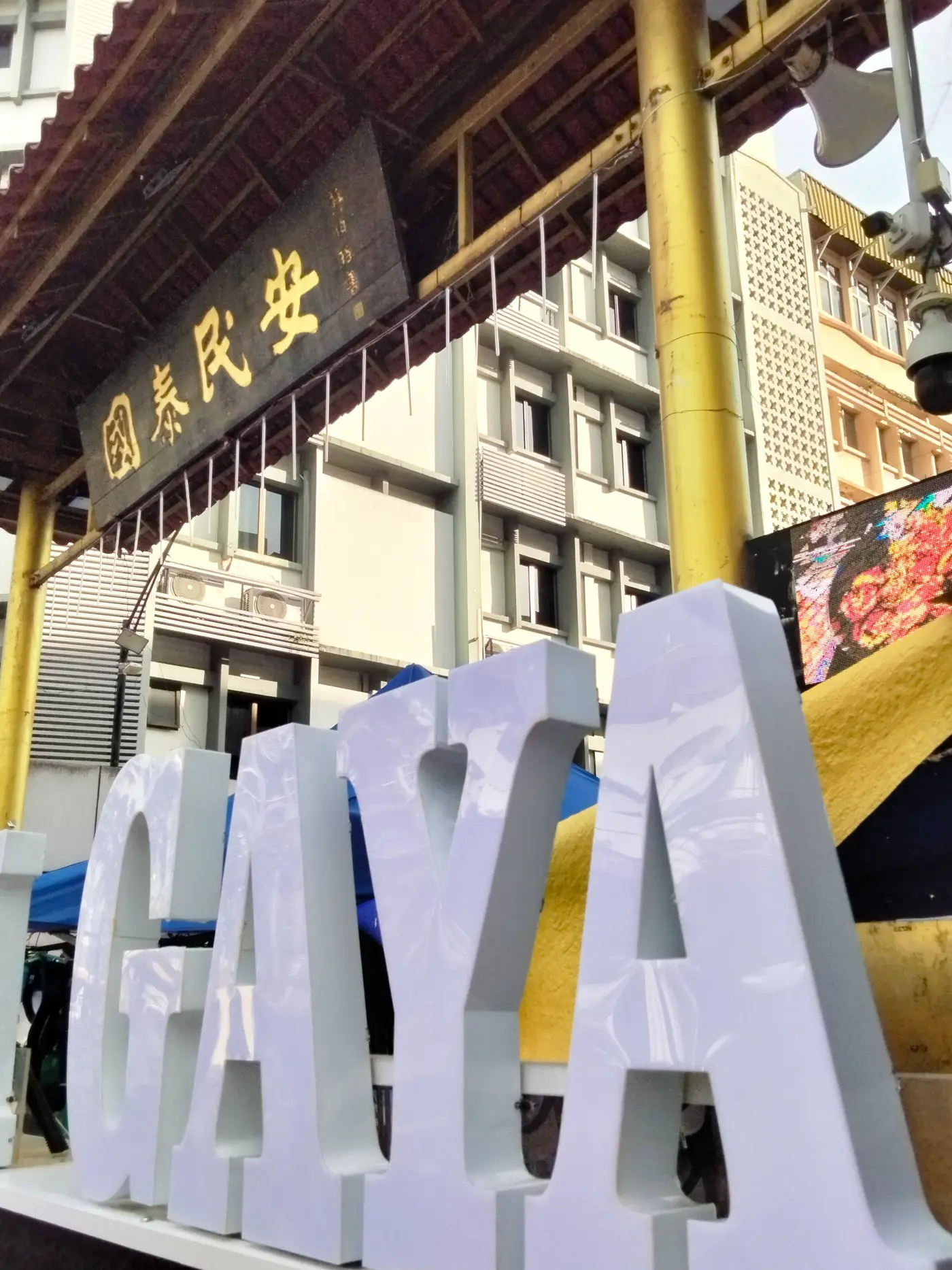
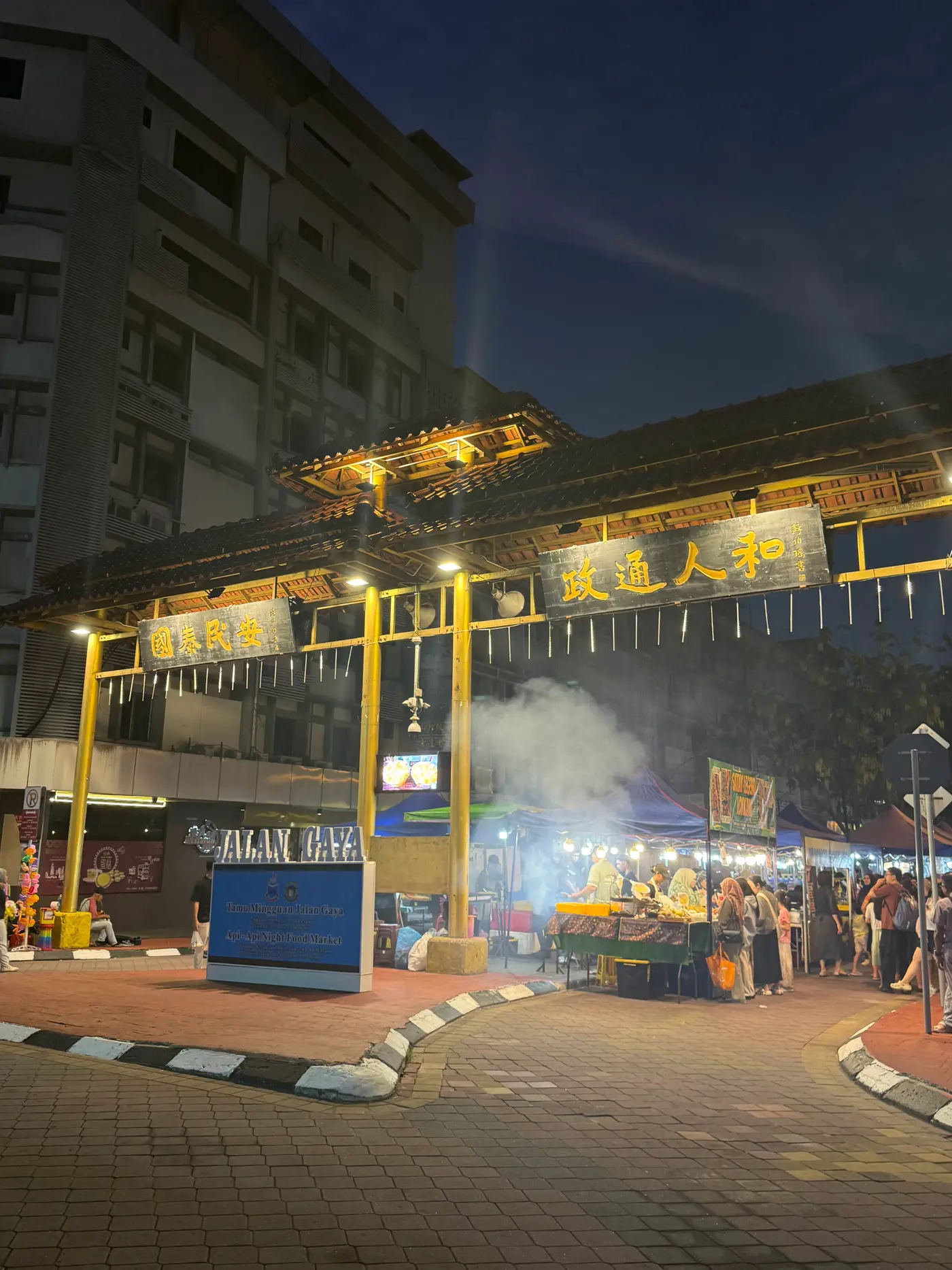
Chinese-style gate arches stand at both ends of Gaya Street, their inscriptions wishing peace and prosperity upon the neighbourhood. They mark the entrance of the old Chinese community and have become the most familiar frame in market photographs.

Photographers love standing under the gate.
III

Three generations under the five-foot way

Many shophouses rebuilt in the 1950s are still family-run: shop below, home above. Old shopkeepers say the five-foot way is part of the shop and part of the street — for brewing tea, playing chess, waiting for customers.

Oral account, for reference only.
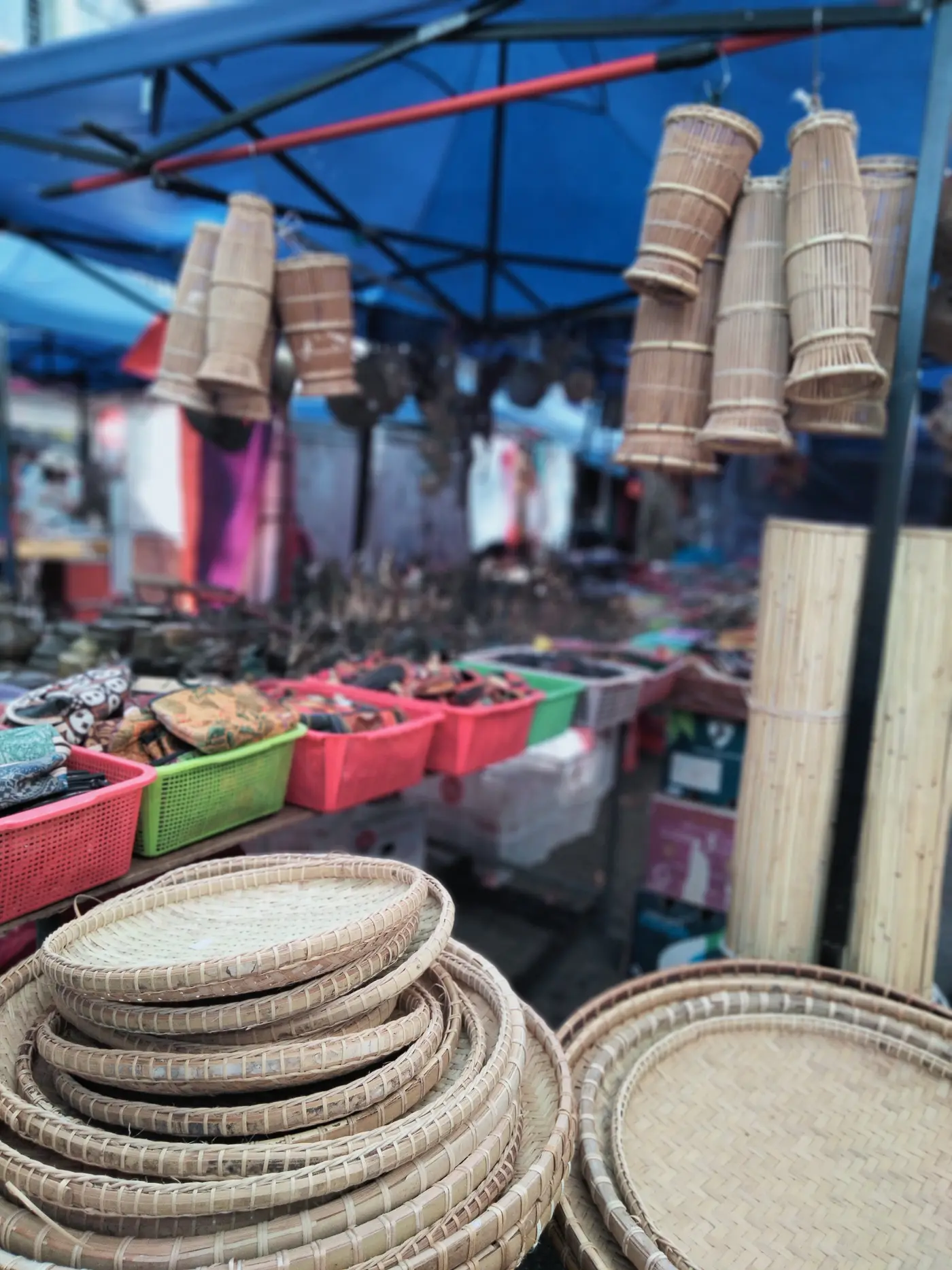
Fruit and handicraft stalls at the Sunday marketSUNDAY MARKET / 07:00—12:00
05THE SUNDAY WALK

Follow the aroma first,
then decide where to go.

Start at the street corner — no need to rush the route. Drift first to the steaming stalls for a hot breakfast, then linger over woven rattan, plants and local snacks. The pleasure of the market is not what you buy, but how every stall lays the city’s everyday life out in the sun.

07:00Arrive by
2–3hComfortable stay
RM 5+Breakfast budget
06LOOK UP

Don’t only watch the stalls —
look up at the old shophouses.

The five-foot way links shop, pedestrian and weather. Faded façades, narrow signboards, old louvred windows and deep shadow under the eaves — the quietest scenery on Gaya Street.

← Walk slower, and the buildings begin to talk.

Five-foot-way façade of an old Gaya Street shophouse
07A WALK DOWN JALAN GAYA

One street,
five ways to walk it.

01Start at the gate archFind the arch at the corner — Gaya Street begins here. On weekdays, traffic and old shops; on Sunday, the first row of market stalls.
02Market stretch · 07:00–12:00Follow steam and aroma first: fruit, rattan, crafts, local snacks. No need to rush — let your eyes decide what to buy.
03Look up at the shophousesThe five-foot-way arcades, faded signboards and old louvred windows along the street are Gaya Street’s quietest scenery.
04Towards Signal HillLook south to the Atkinson Clock Tower — a window from Gaya Street into the past. At the foot of the hill, the old-town walk continues.
05End with the night marketReturn to Jalan Gaya in the evening — the smoke and bustle of the Api-Api night market close out the street’s day.
08FIELD GUIDE

Keep the practical bits
in your pocket.

A / Getting there

Transport

Airport: Kota Kinabalu International Airport is about 8 km from the city centre. A taxi or ride-hailing app is usually most direct; the airport bus reaches the centre, then walk along Jalan Pantai.

Buses: aim for a city-centre stop, then walk into Jalan Gaya from the waterfront side. Allow time for detours during the Sunday market.

Taxi: just say “Gaya Street Sunday Market / Jalan Gaya”, and settle your return plan before getting out.

B / Staying

Time & cost

Best time: Sunday 07:00–10:00 — cooler, with the fullest choice of stalls; evenings are good for returning to the nearby night market for food.

Suggested stay: 2–3 hours; with breakfast, an old-town walk and nearby sights, plan half a day.

Entry / cost: the street and Sunday market are usually free to enter. Spending is at each stall’s posted prices; keep small cash on hand.

C / Parking

Parking

Public lots and mall parking in the city centre are the safest bets. The Sunday market may take over some roads, so arrive early and avoid parking in stall lanes or junctions.

Tip: wear comfortable shoes, carry water, protect against the sun; bring a light umbrella in the rainy season.

09AROUND THE BLOCK

Good food nearby,
starting with a hot bowl.

Good food around Gaya Street needs no complicated guide: for breakfast look for laksa, kopi and crispy snacks; in the evening, stroll along Jalan Gaya and soak up the energy of the Api-Api night market.

Put the flavours on the map →
Kopi, breakfast and slow street time
01Guan’s Kopitiam Gaya Street111, Jalan Gaya · coffee shop & breakfast
02Api-Api Night Food MarketJalan Gaya · street food at night
03Local laksa & kuihLook along the street; don’t fixate on one shop
12PIN THIS PLACE

Now,
you know where to go.

Keep this map on your phone. Once you arrive, start at the corner and follow the voices, the aromas and the shadow under the eaves.

Open Google Maps ↗
13QUICK ANSWERS

Before you go,
a few quick answers.

When is the best time to visit the Gaya Street Sunday market?+

Arrive between 7 and 10 am on Sunday — the temperature is comfortable and the choice of stalls and breakfast is fullest.

What time does the Sunday market close?+

The market usually winds down around noon, with stallholders starting to pack up from 11:30. To see it in full, come early.

Can cars enter Gaya Street on Sunday?+

During the Sunday market, Jalan Gaya is closed to traffic for pedestrians; cars must detour, so park in a nearby public lot or mall car park.

How do I get from Kota Kinabalu airport to Gaya Street?+

The airport is about 8 km from the city centre — take a taxi, ride-hailing car or airport bus, then walk into Jalan Gaya.

Do stalls take cash or cards?+

Stalls are mostly cash-based — bring small notes in ringgit (RM). Some vendors accept QR payments; ask before buying.

Is there an entry fee?+

The street and Sunday market are usually free to enter; individual stall purchases and nearby attractions are charged separately.

14SOURCES

A non-profit educational compilation from public sources and on-site visits.

Every piece of history,
has its source.

Compiled from written sources and oral accounts; corrections welcome where facts differ.